|
 |
 |
 |
 |
 |
 |
 |
 |
 |

| . |  |
. |
Crustacean Shells Might Hold Secret To Safer Long-Range Space Travel
Boxford, MA (SPX) Jul 25, 2007 A team of researchers is seeking to determine if an ingredient found in shrimp and lobster shells might make future missions to Mars safer for space crews who could be injured along the way. Scientists from Harvey Mudd College (HMC) in California and the University of Louisville are collaborating with bioengineering and biomaterials company BioSTAR West on research efforts to better understand how to treat injuries aboard long space flights. This effort is directed and led by Hawaii Chitopure Inc., a Honolulu based biomaterials company specializing in the U.S. manufacture of ultra-pure chitosan, a polymer developed from the shells of crustaceans, such as lobsters, crabs, and shrimp. The team has developed experiments using chitosan, which has recently gained approval in the U.S. for use in bandages and other hemostatic agents. The series of space experiments will be launched aboard NASA's STS-118 Space Shuttle Endeavour mission, scheduled for August 7, 2007. HMC Professor of Chemistry Shenda Baker and Professor of Engineering and Biology Elizabeth Orwin are studying human cell responses in microgravity through a series of experiments that will be completed during Endeavour's scheduled 11-day flight. Baker and Orwin helped coordinate the research design and will provide oversight to the Hawaii Chitopure-sponsored experiment, which builds on years of space flight research spearheaded by Dr. William Wiesmann, president and CEO of Hawaii Chitopure Inc., senior managing partner of BioSTAR West and a trustee at Harvey Mudd College. The team also includes Professor Eugenia Wang of the University of Louisville, who has participated on research efforts with Wiesmann on prior space shuttle missions. Wang will contribute her expertise in space flight technology and analysis techniques to identify and quantify the effect of microgravity on the responses of genes and proteins using microchip platform technology. Through this collaboration, investigators will examine the effect of microgravity on human monocytes, which are typically one of the first responders to infection and trauma, and will begin to develop a better understanding of the role of chitosan-based biocompatible antibacterials in modulating the response. They will also be able to monitor the transformations of cells that return from space, and concurrently examine them over time as their human counterparts, the astronauts, also experience life post-space flight. During the duration of the mission, the team will conduct an identical experiment simultaneously on Earth. Following the mission, analyses will be done to compare the space-based and ground-based cellular expression. Baker explains that astronauts, as well as space-flown mammalian cells, show a weakened immune response to wounds and injury. "These experiments will study the effects of microgravity on wound repair and the ability of chitosan-based materials to accelerate the wound healing process, reduce infection and ultimately reduce wound scarring," she says. "Because the effects of microgravity on immune and wound-healing cells are similar to the body's response following trauma on Earth, these experiments also offer an excellent opportunity to observe the fundamental genetic responses to these compounds with and without infection." Community Email This Article Comment On This Article Related Links Harvey Mudd College BioSTAR West Hawaii Chitopure Space Medicine Technology and Systems
 European Markets For Image Guided Surgery And Surgical Navigation
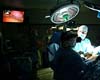 Dublin, Ireland (SPX) Jul 16, 2007
As minimally invasive surgeries (MIS) gradually phase out open invasive surgeries, image guided surgical (IGS) systems will experience greater uptake among surgeons. These devices provide surgeons an unbeatable advantage by aiding real-time navigation and offering a 3D virtual representation of a specific organ. IGS systems include fibre optic guides, internal video cameras, endoscopes and ultrasonography to track the surgical instruments inside the human body during surgery. |
|
|

| The content herein, unless otherwise known to be public domain, are Copyright 1995-2007 - SpaceDaily.AFP and UPI Wire Stories are copyright Agence France-Presse and United Press International. ESA Portal Reports are copyright European Space Agency. All NASA sourced material is public domain. Additional copyrights may apply in whole or part to other bona fide parties. Advertising does not imply endorsement,agreement or approval of any opinions, statements or information provided by SpaceDaily on any Web page published or hosted by SpaceDaily. Privacy Statement |