|
 |
 |
 |
 |
 |
 |
 |
 |
 |

| . |  |
. |
Kinetic Energy Interceptor Successfully Completes First Wind Tunnel Test
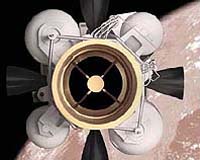
Tucson AZ (SPX) Jun 15, 2005 Raytheon recently completed the first in a series of risk-reduction high speed wind tunnel tests of the Kinetic Energy Interceptor (KEI) missile in preparation for future flight testing. KEI is the Missile Defense Agency's (MDA) mobile, multi-mission, high- performance interceptor component of the layered Ballistic Missile Defense System, with Northrop Grumman Corporation serving as the prime contractor for the MDA - Kinetic Energy Directorate. The testing focused on acquiring aerodynamic force and moment data, as well as high frequency pressure and acoustic data on the second stage vehicle. A key part of the test was to obtain data to allow selection of a nose shape for the missile. The data was gathered at the Polysonic Wind Tunnel in St. Louis, Mo. All test objectives were achieved and results matched predictions. "This type of early aerodynamic characterization of our design approach provides essential data and insight to anchor our analytical models and guide our design implementation. With this insight we are able to maximize performance while reducing program risk and enhancing our mission assurance," said Newton Johnson, Raytheon's KEI chief engineer. "Characterization tests like these are critical to achieving the performance challenges of boost phase intercept. This test demonstrates both technical objectives and the Raytheon / Orbital Sciences team's commitment to development excellence and meeting customer expectations." The test was conducted in March under the direction of Orbital Sciences Corporation, a primary partner with Raytheon on the KEI interceptor. Orbital was responsible for the test, including requirements development, model design, test support and data reduction. Related Links Raytheon SpaceDaily Search SpaceDaily Subscribe To SpaceDaily Express  US Bill Seeks Anti-Missile Technology On New Airbus A380
 Washington DC (AFP) Jun 15, 2005
A new bill presented Tuesday in Congress calls on the US Federal Aviation Administration to insist that European aircraft manufacturer Airbus provide anti-missile technology in its new supercarrier A380s. |
|
|

| The content herein, unless otherwise known to be public domain, are Copyright 1995-2006 - SpaceDaily.AFP and UPI Wire Stories are copyright Agence France-Presse and United Press International. ESA PortalReports are copyright European Space Agency. All NASA sourced material is public domain. Additionalcopyrights may apply in whole or part to other bona fide parties. Advertising does not imply endorsement,agreement or approval of any opinions, statements or information provided by SpaceDaily on any Web page published or hosted by SpaceDaily. Privacy Statement |