|
 |
 |
 |
 |
 |
 |
 |
 |
 |

| . |  |
. |
Russia To Increase Rocket System Production As Demand Increases
Korolev, Moscow (SPX) Dec 29, 2006 The Corporation Board of Directors chaired by N.F. Moiseev took place at S.P. Korolev RSC Energia. The President, General Designer N.N. Sevastiyanov and RSC Energia's Managing Board submitted draft Program of the Corporation Long-Term Development over the period till 2015 aimed at the following activities: manned space systems, automated space systems, rocket systems. As per Draft Long-Term Program, by 2009 it is planned to double the rate of manufacture and launches of rocket-space systems according to the core business of the Corporation. This move reflects increased demand from both domestic and international space markets. The Board of Directors approved the Corporation work program for 2007, which foresees a 30 % increase in its budget revenues as compared with those in 2006, as well as the investment plan for 2007 to the extent of 1 bln, 787 mln rubles with the aim to expand and modernize production capacities available at RSC Energia. In addition, the Board of Directors approved the Corporation performance over the 9 months of 2006. The Corporation receipts have increased by 31 % for 3 quarters of the current year as compared with those for the same period of 2005. Board of Directors took decision that the President, General Designer N.N. Sevastiyanov and RSC Energia's Managing Board should submit Draft Program of the Corporation Long-Term Development till 2015 to the respective state administration body for concurrence in the established order. Related Links Launch Pad at Space-Travel.com  Russia Set To Implement Ambitious Space Program Part II
 Moscow, Russia (RIA Novosti) Dec 21, 2006
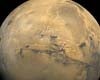
Aside from the Spektr and Radioastron projects, Russia has other plans to study and explore celestial bodies. For example, the Koronas-Foton spacecraft, due to be launched in 2008, will be packed with instruments for observing the Sun. In addition, Russia expects to begin the Phobos-Ground project in 2009, which will be the country's first interplanetary mission in 20 years. It will bring back ground samples from Phobos, one of Mars' two moons. |
|
|

| The content herein, unless otherwise known to be public domain, are Copyright 1995-2006 - SpaceDaily.AFP and UPI Wire Stories are copyright Agence France-Presse and United Press International. ESA PortalReports are copyright European Space Agency. All NASA sourced material is public domain. Additionalcopyrights may apply in whole or part to other bona fide parties. Advertising does not imply endorsement,agreement or approval of any opinions, statements or information provided by SpaceDaily on any Web page published or hosted by SpaceDaily. Privacy Statement |