
 |
 |
 |
 |
 |
 |
 |
 |
 |
 |

| . |  |
. |
To Queue Or Not To Queue
Tel Aviv, Israel (SPX) Sep 24, 2008 If there's one thing that separates humankind from the animals, it's that human beings wait in lines. To make a deposit at the bank, to pay for groceries, even to vote -- we've all learned to queue, one behind the other. And we've learned, if not to like it, then at least to grin and bear it. But time is money, and both individuals and businesses may suffer as lines get longer and longer, says Tel Aviv University's Prof. Refael Hassin, a mathematician. He has been utilizing game theory to study wait times in line and understand their economic consequences. His findings -- many of which turn common sense upside-down -- could also turn the service industry on its head, help businesses increase profits, and make society become a more pleasant place for everyone. Results of his research were published recently in the journal Management Science.
An Espresso While You Wait "I don't suggest that companies hire more cashiers at the sight of a growing queue," he says. "With some basic analysis, however, peak times of wait lines can be determined, and businesses can ensure that customers stay happy while waiting, by offering them entertainment like TV or maybe cappuccinos." But sometimes the lines themselves are the problem, Prof. Hassin believes. His study suggests that waiting times are affected by a number of random variables, and that people who gather in a crowd might be serviced more efficiently than people standing in line. Sometimes, disorder creates its own order. In an ice-cream shop, for example, an arriving customer who crowds to the display case will experience shorter waiting times for service than when the same number of customers wait patiently in line. This means that more ice cream will be served and consequently more money will end up in the till. "If there are 10 people in an ice-cream shop, on average you will be served after the fifth person if you do not wait in an organized line," says Prof. Hassin. Prof. Hassin went on to explain, "Of course I might get served 1st, 2nd, or even last. But on average the statistics are based on human decision-making strategies: If one is deciding whether or not to enter a shop and sees many people there already, most would prefer an unordered queue -- because in this circumstance there is a good chance of being served sooner than if one was waiting patiently in line."
Does Democracy Need to Wait Its Turn? "People in lines tend to think only about themselves and ignore their impact on others," says Prof. Hassin. "If I join the line and you come later, you will wait longer because of me. Customers are often selfish and ignore the effect their behavior has on others." This is why in some cases it's better to manage a queue in an unorganized non-democratic way, serve in reverse order of arrival, or conceal queue length information from potential customers, he explains. Community Email This Article Comment On This Article Share This Article With Planet Earth
Related Links Tel Aviv University All About Human Beings and How We Got To Be Here
 Computers figuring out what words mean
 San Francisco (AFP) Sept 18, 2008
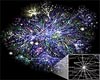
The Internet got smarter this week with the release of a semantic map that teaches computers the meanings behind words -- and gives the machines a vocabulary far larger than that of a typical US college graduate. |
|
|

| The content herein, unless otherwise known to be public domain, are Copyright 1995-2007 - SpaceDaily.AFP and UPI Wire Stories are copyright Agence France-Presse and United Press International. ESA Portal Reports are copyright European Space Agency. All NASA sourced material is public domain. Additional copyrights may apply in whole or part to other bona fide parties. Advertising does not imply endorsement,agreement or approval of any opinions, statements or information provided by SpaceDaily on any Web page published or hosted by SpaceDaily. Privacy Statement |

 del.icio.us
 Digg
Digg Reddit
 YahooMyWeb
 Google
 Facebook