|
 |
 |
 |
 |
 |
 |
 |
 |
 |

| . |  |
. |
Will Future Wars Be About Water? Not Likely, Experts Say
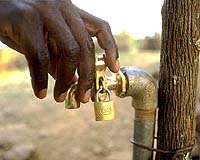
Stockholm (AFP) Aug 29, 2005 Regional tensions over water resources will multiply as the world becomes a drier place, but fears of water wars have faded as countries adopt a cooperative approach rather than violence, experts gathered at a Stockholm water symposium said. War over water goes back to biblical times, and conflict over freshwater access has been a major factor in countless standoffs since. "When 60 percent of the world population suffers from water shortages, it is easy to imagine the potential for conflict," Patricia Wouters, director of the International Water Law Research Institute at Dundee University, Scotland, told AFP at the World Water Week, which ended at the weekend. As recently as 1988 then-foreign minister of Egypt and future UN chief Boutros Boutros Ghali said that "the next war in our region will be over the waters of the Nile, not politics". But although UN estimates have confirmed that large parts of the world, including China and most Arab countries, face severe shortages within a decade, governments have shown that they are willing to knock heads together rather than resort to armed force. "There will always be tension, for sure, but water will not lead to violent conflict," said Anders Jaegerskog, a Swedish foreign ministry expert on global development and Middle Eastern water issues. "Minor skirmishes, maybe, but it will not always be clear that they are really linked to water. Water may just be a pretext," he told AFP. Moral considerations aside, states have realized that it is costly and unnecessary to go to war over water. Israel, which has water supply agreements with both Jordan and Palestine, is a case in point. "If Israel wanted to take complete control of its water sources, it would have to take over chunks of Syria, Jordan and Lebanon. But they are getting a far cheaper result through de-salination," said Jaegerskog. Access to foreign food supplies also helps defuse tensions, as Middle Eastern countries import food which they can't produce due to lacking water. Given that it takes 2,000 to 4,000 litres of irrigation water to produce a single kilogram of rice, experts have likened the food purchases to "water imports" which alleviate pressures on local agriculture. The UN has attempted to pass a legal framework for water dispute resolution, but a 1997 convention calling for peaceful cooperation between states sharing water resources has still not been ratified. Yet, a stronger legal framework would help ensure that states remain cooperative, said Dundee university's Wouters. She said the world had become "divided between the haves and the have-nots in terms of water access", with Mozambique, Namibia, Laos and Ethiopia clearly in the latter group. "We need the law to protect the weak, to create an equal playing field," she said. But even without legally-binding rules, international organizations have begun to get involved in water conflict resolution, using their expertise and their money. The World Bank has sponsored the Nile Basin initiative, which brings together the 10 countries sharing Africa's longest river. Most of them are poor and unstable politically, and their already suffering population is expected to double over the next 25 years, "placing additional strain on water and other natural resources", the World Bank said. Millions of dollars have gone into simply providing a forum for Nile talks, and although the World Bank promised it might help individual countries with their water problems, its efforts are little more than a drop in the ocean in global terms. Many countries need massive infrastructure help and expertise before they can even think about ensuring their fair water access, but who will pay for this "is a question without an answer", said Alistair Rieu-Clarke, research and teaching fellow at Dundee's water law research institute. Related Links SpaceDaily Search SpaceDaily Subscribe To SpaceDaily Express  Water Supply Key To Gender Equality In Developing World: Experts
 Stockholm (AFP) Aug 29, 2005
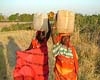
Men and women are not equal faced with the water scarcity afflicting most of the planet, and easier access to clean water is a key factor for gender equality, experts said at the Stockholm Water Week. |
|
|

| The content herein, unless otherwise known to be public domain, are Copyright 1995-2006 - SpaceDaily.AFP and UPI Wire Stories are copyright Agence France-Presse and United Press International. ESA PortalReports are copyright European Space Agency. All NASA sourced material is public domain. Additionalcopyrights may apply in whole or part to other bona fide parties. Advertising does not imply endorsement,agreement or approval of any opinions, statements or information provided by SpaceDaily on any Web page published or hosted by SpaceDaily. Privacy Statement |