|
 |
 |
 |
 |
 |
 |
 |
 |
 |

| . |  |
. |
EU members braced for emissions targets
Brussels (AFP) Jan 14, 2008 EU members are bracing for proposed greenhouse gas emission targets due next week as they fret over how much of the burden they will have to bear in the fight against climate change. The European Commission on January 23 is to unveil plans for individual targets for member states on how much they need to cut their carbon dioxide emissions in the coming years. The targets are the cornerstone of a campaign agreed by the EU last March to slash the 27-nation bloc's carbon dioxide emissions by at least 20 percent from 1990 levels by 2020. Countries are eager to avoid targets they will be unable to meet because falling short of the mark could mean fines potentially running into the billions of euros (dollars). The national targets, which will be set in relation to 2005 emissions levels, will reflect each country's per capita gross domestic product account so that the richest nations bear the brunt of the overall burden. According to a draft of the plans, the EU's poorest countries, mostly former communist nations in eastern Europe, would even be able to increase their emissions as their economies catch up with the rest of the bloc. In order to avoid disputes, the Commission is making its proposed targets "so interwoven that they will be difficult to modify," one diplomat said. The overall targets are supposed to be reached by stepping up the use of renewable energies such as wind, solar and geothermal sources as well as biofuels and making buildings more energy efficient. The Commission's drive to cut pollution also include plans to increase the use of Europe's innovative emissions trading scheme, which allows energy-intensive plants to trade emissions credits. Under the plans, the scheme would be extended to cover a wider range of industries such as air transport as well as gases other than CO2. The Commission wants to sell the credits whereas most are given to firms currently. With member states worried about how they will meet their targets, governments "are all offering additional ideas" about how to cut emissions, one senior Commission official said. "They grumble but they admit that we are proposing a coherent system," he said. Concerned about the targets the Commission will dish out, countries have been highlighting the specific circumstances they want to be taken into account when their target is set. For instance, one Finnish government official said: "We directed the Commission's attention to Finland's specific conditions such as its difficult climate, great distances, (and) its distance from the heart of Europe." However, the biggest debate brewing is over innovative but costly renewable energies. "Everyone is worried because a huge effort has to be made," the senior official said. Renewable energy sources are supposed to make up 20 percent of the EU's energy consumption by 2020, against 8.5 percent currently. Here again, the burden will be shared out depending on how rich countries are. After the Commission unveils each country's emissions target on January 23, governments and EU lawmakers will then have to negotiate the details, which is likely to take until early 2009. Community Email This Article Comment On This Article Related Links Powering The World in the 21st Century at Energy-Daily.com
 New Understanding For Superconductivity At High Temperatures
 Montreal, Canada (SPX) Jan 14, 2008
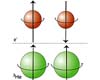
An international research team has discovered that a magnetic field can interact with the electrons in a superconductor in ways never before observed. Andrea D. Bianchi, the lead researcher from the Universite de Montreal, explains in the January 11 edition of Science magazine what he discovered in an exceptional compound of metals - a combination of cobalt, indium and a rare earth - that loses its resistance when cooled to just a couple of degrees above absolute zero. |
|
|

| The content herein, unless otherwise known to be public domain, are Copyright 1995-2007 - SpaceDaily.AFP and UPI Wire Stories are copyright Agence France-Presse and United Press International. ESA Portal Reports are copyright European Space Agency. All NASA sourced material is public domain. Additional copyrights may apply in whole or part to other bona fide parties. Advertising does not imply endorsement,agreement or approval of any opinions, statements or information provided by SpaceDaily on any Web page published or hosted by SpaceDaily. Privacy Statement |