
Earth Science News
EARLY EARTH
Ancient nitrogen enzyme study illuminates early Earth conditions and life detection
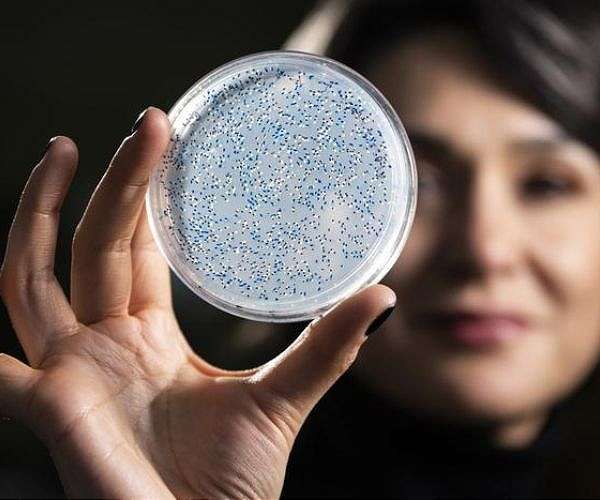
illustration only

Ancient nitrogen enzyme study illuminates early Earth conditions and life detection

by Clarence Oxford
Los Angeles CA (SPX) Jan 26, 2026

By resurrecting a 3.2 billion year old enzyme and testing it inside living microbes, researchers have opened a new experimental window on early Earth and how to recognize signs of life on other worlds. The work, led by scientists at the University of Wisconsin-Madison and supported by NASA, uses synthetic biology to reconstruct ancient biochemistry in the laboratory.

The team focused on nitrogenase, an enzyme central to the biological process that converts atmospheric nitrogen into forms that living organisms can use. Study leader Betul Kacar describes nitrogenase as an enzyme that helped set the tone for life on this planet, arguing that without it, life as we know it would not exist.

Instead of relying solely on rare and sometimes ambiguous geological samples, the researchers turned to reverse engineering, using sequence data from modern organisms to infer and rebuild ancestral forms of nitrogenase. They then inserted these ancient versions into microbes to see how they functioned under contemporary laboratory conditions, creating a direct way to probe how key metabolic processes operated billions of years ago.

Doctoral researcher Holly Rucker notes that the world of three billion years ago was dramatically different from today. Before the Great Oxidation Event, Earth's atmosphere held more carbon dioxide and methane, and life consisted mainly of anaerobic microbes. Understanding how these early organisms accessed essential nutrients such as nitrogen helps clarify how life persisted and diversified in this low oxygen environment.

Although enzymes do not fossilize, their activity can leave a record in the form of isotopic signatures preserved in rocks. For nitrogenase, these signatures involve characteristic patterns in nitrogen isotopes that geobiologists measure to infer the presence and activity of ancient life. Much previous work has assumed that ancient enzymes produced the same isotopic patterns as their modern descendants.

Rucker set out to test that assumption directly by comparing the isotopic fingerprints of reconstructed ancient nitrogenase with those generated by present day forms. The results show that the isotopic signatures preserved in the rock record match those produced by both ancient and modern nitrogenase, indicating that the key mechanism controlling this signal has remained stable over billions of years.

This stability is especially striking because the DNA sequences of nitrogenase have changed substantially over time. According to the team, the mechanism underlying the isotopic signature appears to have been conserved even as other structural and functional aspects of the enzyme evolved. Rucker now aims to understand why this core feature persisted while other properties shifted.

The project forms part of MUSE, a NASA funded astrobiology research consortium based at the University of Wisconsin-Madison and led by Kacar. MUSE brings together astrobiologists, geologists, microbiologists and molecular biologists from multiple institutions to connect evolutionary insights on Earth with the goals of current and future space missions.

With nitrogenase derived isotopes now confirmed as a robust biosignature on Earth, the findings provide a stronger framework for evaluating similar signals in extraterrestrial samples. If spacecraft or landers detect matching nitrogen isotope patterns on other planetary bodies, they could point to metabolic processes analogous to those that sustained early life here.

Kacar emphasizes that the search for life elsewhere begins with a deep understanding of our own planet's past. She argues that to interpret any potential biosignatures beyond Earth, scientists must first reconstruct how life functioned during the first billion years of Earth's history, long before complex oxygen dependent organisms reshaped the biosphere.

The new study, published in Nature Communications, demonstrates how synthetic biology can complement traditional geological approaches to ancient life. By rebuilding and testing ancestral enzymes under controlled conditions, researchers can ground their interpretations of the rock record in experimentally verified mechanisms rather than assumptions alone.

Beyond nitrogenase, the team sees this approach as a template for resurrecting other ancient enzymes tied to key planetary processes. Applying similar methods to different metabolic pathways could refine models of early Earth environments and broaden the range of biosignatures that astrobiologists can seek in data from Mars, icy moons and exoplanet atmospheres.

Research Report:Resurrected nitrogenase reveals conserved isotopic fingerprint of ancient biological nitrogen fixation

Related Links
University of Wisconsin-Madison
Explore The Early Earth at TerraDaily.com

Subscribe Free To Our Daily Newsletters
Tweet

RELATED CONTENT
The following news reports may link to other Space Media Network websites.
EARLY EARTH
Cosmic krypton timestamps reveal Australia landscape evolution and resources
Sydney, Australia (SPX) Jan 14, 2026
Curtin University researchers have unveiled a new way to read the ancient history of Australian landscapes using tiny zircon grains that act as a cosmic clock for erosion and sediment storage. The international team, led by Curtin's Timescales of Mineral Systems Group in the School of Earth and Planetary Sciences, worked with colleagues from the University of Gottingen and the University of Cologne to study zircon crystals preserved in ancient beach sands. Zircon is one of the most resilient miner ... read more

EARLY EARTH
'Are You Dead?': Chinese app for solo dwellers goes viral

South Africa declares national disaster as floods batter region

Hong Kong ferry disaster ruled 'unlawful killing' after 13 years

Climate change fuels disasters, but deaths don't add up

EARLY EARTH
Self-healing composite can make airplane, automobile and spacecraft components last for centuries

Amazon expands 'sovereign cloud' in Europe

Quantum camera startup plans satellite and telescope constellations

NASA heavy ion tests confirm Sakura II AI chip for orbital and lunar use

EARLY EARTH
Activists question treaty power to protect high seas

Pendulum device taps power from ocean currents

Scientists plan deep-sea expedition to probe 'dark oxygen'

Trump vows to relaunch Egypt-Ethiopia talks on dam row

EARLY EARTH
Solar cycles seen in Antarctic fast ice history

Penguins bring forward breeding season as Antarctica warms: study

NATO chief's tactic on Trump's Greenland threats? Change topic

EU has 'strategic responsibility' in Greenland: France

EARLY EARTH
Warming trend to intensify crop droughts across Europe and beyond

How the EU and Mercosur agro-powerhouse Brazil differ on pesticides

Ticking time bomb: Some farmers report as many as 70 tick encounters over a 6-month period

Black carbon from straw burning limits antibiotic resistance in plastic mulched fields

EARLY EARTH
Rescuers race to find missing as deadly floods ravage Mozambique

Death toll from floods rises in Mozambique, South Africa

Tunisia flood death toll rises to five, with four missing

Indonesia revokes permits of 28 firms after deadly floods

EARLY EARTH
Sudanese put through 'hell' as advanced weapons fuel war: UN rights chief

Sudan paramilitary used mass graves to conceal war crimes: ICC deputy prosecutor

Sudan paramilitary forces say regret deadly Chad border clash

Uganda army denies seizing opposition leader as vote result looms

EARLY EARTH
China's birth rate falls to lowest on record

To flexibly organize thought, the brain makes use of space

Moroccan fossils trace ancient African branch near origin of Homo sapiens

Socializing alone: The downside of communication technology

Subscribe Free To Our Daily Newsletters


The content herein, unless otherwise known to be public domain, are Copyright 1995-2024 - Space Media Network. All websites are published in Australia and are solely subject to Australian law and governed by Fair Use principals for news reporting and research purposes. AFP, UPI and IANS news wire stories are copyright Agence France-Presse, United Press International and Indo-Asia News Service. ESA news reports are copyright European Space Agency. All NASA sourced material is public domain. Additional copyrights may apply in whole or part to other bona fide parties. All articles labeled "by Staff Writers" include reports supplied to Space Media Network by industry news wires, PR agencies, corporate press officers and the like. Such articles are individually curated and edited by Space Media Network staff on the basis of the report's information value to our industry and professional readership. Advertising does not imply endorsement, agreement or approval of any opinions, statements or information provided by Space Media Network on any Web page published or hosted by Space Media Network. General Data Protection Regulation (GDPR) Statement Our advertisers use various cookies and the like to deliver the best ad banner available at one time. All network advertising suppliers have GDPR policies (Legitimate Interest) that conform with EU regulations for data collection. By using our websites you consent to cookie based advertising. If you do not agree with this then you must stop using the websites from May 25, 2018. Privacy Statement. Additional information can be found here at About Us.